ROI4Presenter · Sales enablement SaaS · Founding designer · 2021-2024
Doubled active users across two launches.
A platform that turns static decks into interactive, measurable presentations. I joined pre-MVP, built the design function from nothing, and led two launches. The second one is where the interesting problems were.
- Role
- Founding product designer. Grew the team to 3.
- Timeframe
- 2021-2024
- Team
- Founder · PM · 3 engineering leads · QA · Marketing · 2 junior designers
- Surfaces
- CMS · Editor · Viewer · Admin · Analytics
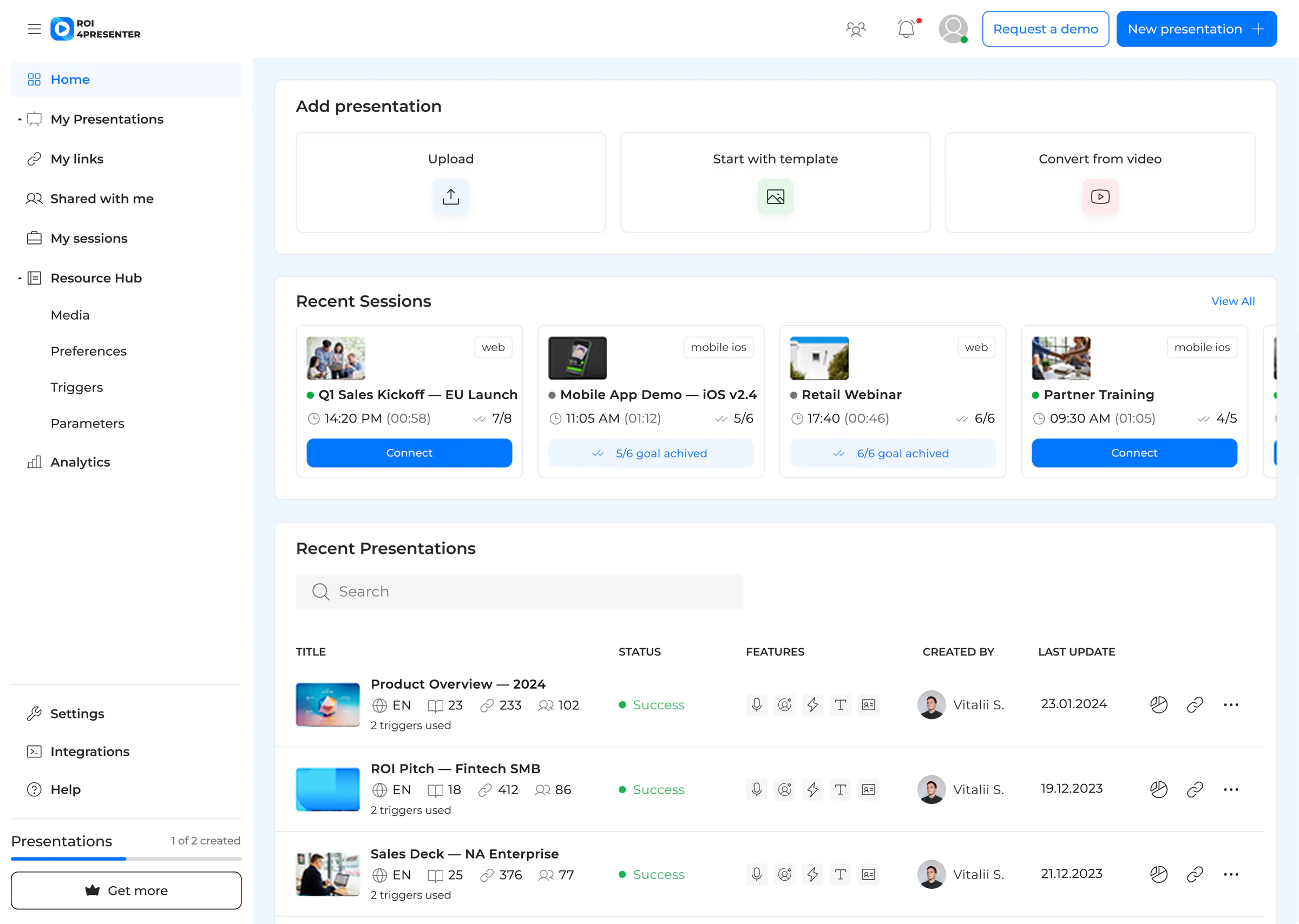
The short version
The pre-MVP CMS was built with no research and no design: heavy friction, missing functionality, and no way for a company to onboard a team. Growth had stalled. Two launches later the product had doubled its active users and won a Product Hunt placement.
Auditing a product built without design.
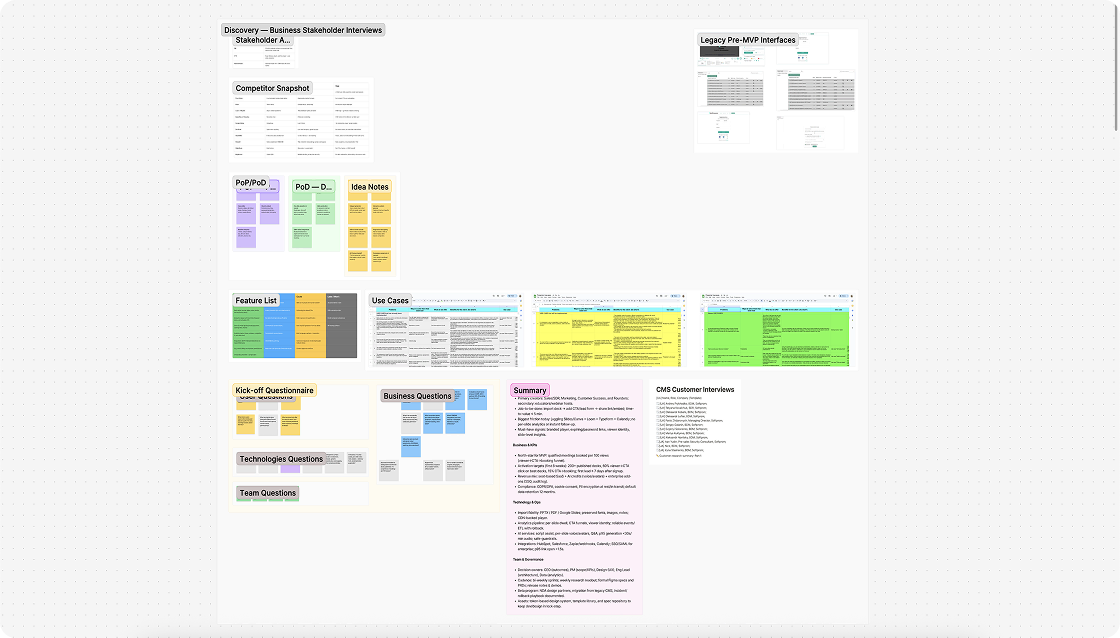
I audited everything that existed: the legacy CMS, sales notes, support tickets, market decks and early flow drafts. Then I built a kickoff questionnaire covering KPIs, lead-generation goals, must-have features, technical constraints, timeline and budget. Stakeholder answers set the success metrics and guided the whole redesign. I also had direct access to a partner sales team using the product daily, which is rarer and more useful than any survey.
Everything the company already knew, in one place
Legacy CMS, sales notes, support tickets, market decks, early flows. The audit is what stopped us redesigning problems that were already solved.
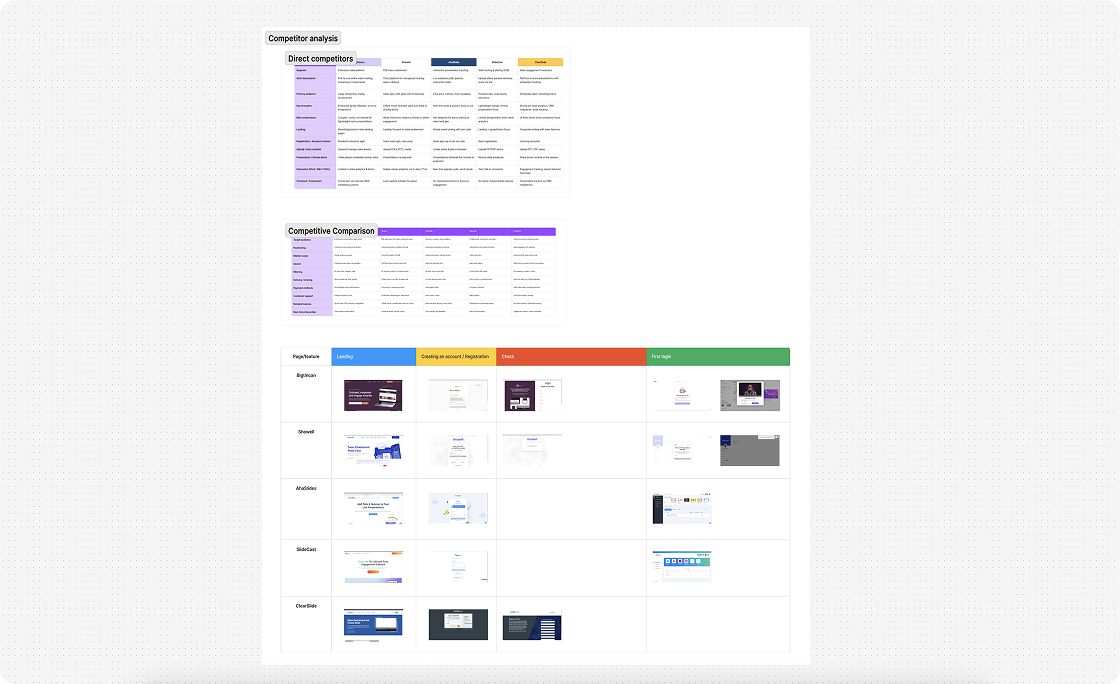
Benchmarked against the tools buyers compared us to
Brightcove, Showell, AhaSlides, SlideCast, ClearSlide. Mapped into a POP-POD matrix and a feature grid that set the Phase 1 priorities.
No interactive tools, no way to book a demo from the deck, and manual follow-up after every send.Sales manager
I can't see engagement per slide, and there's no funnel from a deck into the CRM.Marketing manager
Nothing here helps a pitch stand out, and there's no async option at all.Startup founder
Uploading a PPTX breaks the layout, and there's no Drive import to fall back on.Support tickets
Make the core product usable.
New visual design, a navigation structure that could scale, a new upload flow, a share flow and communication during a presentation. It also shipped the first measurement: slide views, time on slide, clicks and lead forms syncing straight into HubSpot and Calendly. Enough to prove a deck was doing work, not yet enough to improve it. I built the custom design system alongside all of it, which is what later cut UI delivery time by 30 percent.
The CMS, rebuilt around a scalable navigation
Modern UI and a structure that could carry features we had not designed yet.
Upload, the first thing anyone does
PPTX, PDF, MP4, links and Google Drive. The step where a new user either gets to value or leaves.
Sharing that carries the brand
Branded links, personalisation, password and expiry controls, and embed codes, so a deck sent to a prospect still looks like it came from the company and stops working when it should.
Interactivity while the deck is running
Chat, video reactions and comments during a live presentation, which is the feature that separated the product from a PDF.
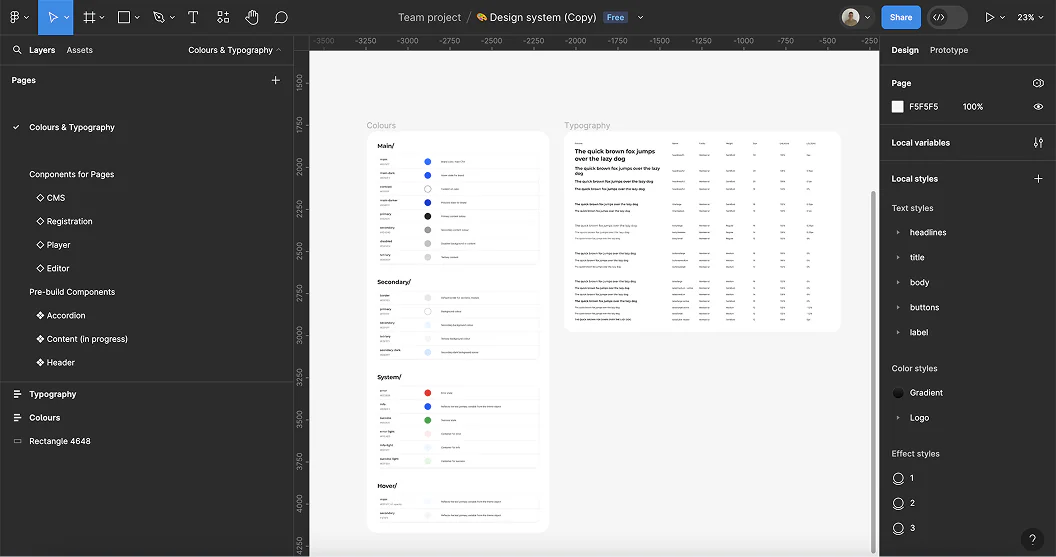
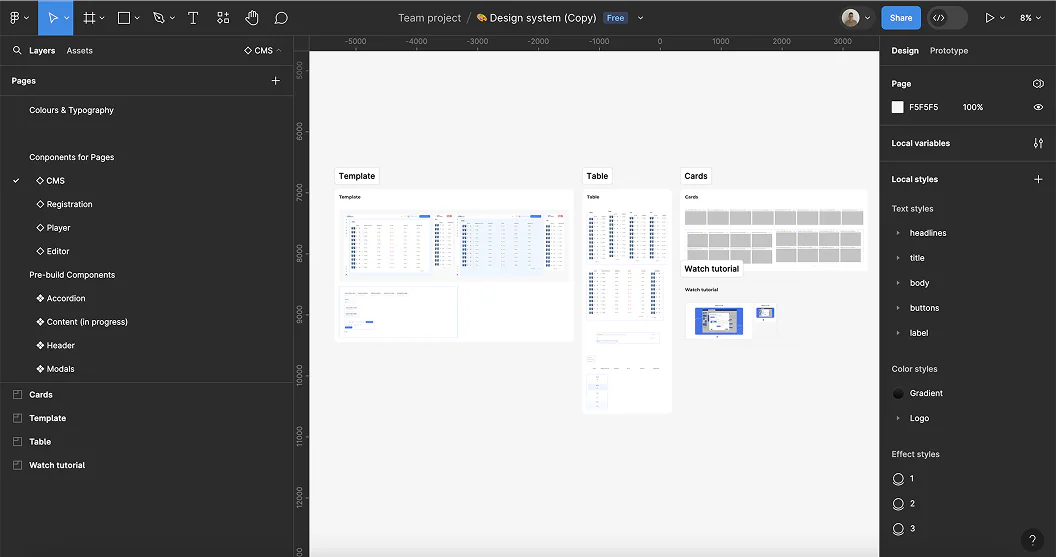
A component-based system, built as the flows matured
Typography, spacing, components and states. This is what took 30% out of UI delivery time.
Then ChatGPT changed what a presentation tool had to be.
Launch one had shipped and the product was working. Then the whole category moved in a matter of months. Competitors integrated AI features and user expectations reset with them, so interactivity, automation and personalisation stopped being differentiators and became the price of entry. Most of what the first research round had told us was now describing a market that no longer existed. Rather than patch the roadmap I opened a second full research cycle (new competitor benchmarks, new interviews, new personas), and launch two was built on it.
Adapt quickly, or lose the ground we had
The choice was framed that plainly at the time. It is the reason the next phase started with research rather than a feature list. The fastest way to ship the wrong thing would have been to copy whatever competitors had just announced.

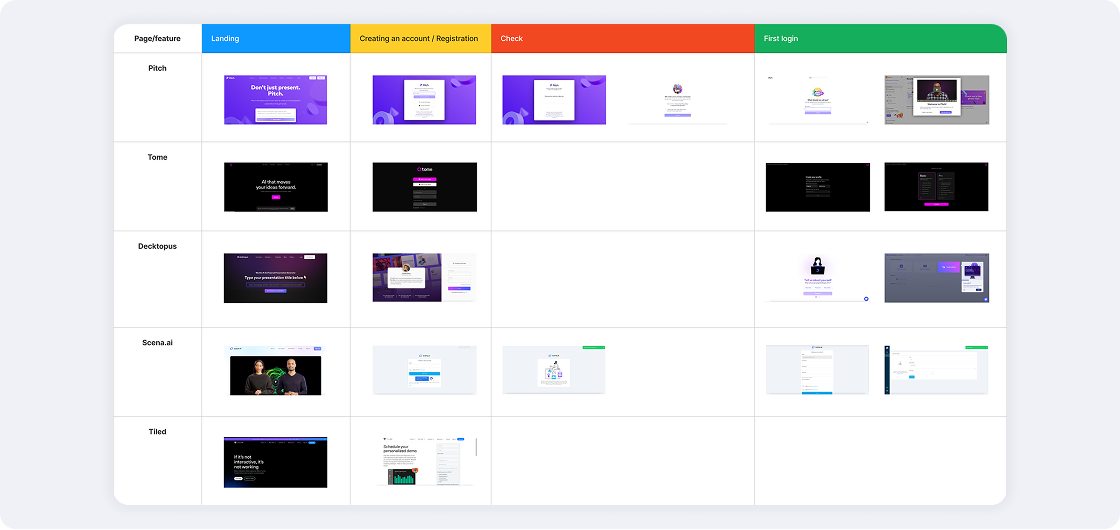
A second benchmark, against a different set of tools
The first benchmark compared us to presentation platforms. This one looked at how advanced tools handled onboarding, inline editing, AI assistance, analytics and integrations: the five areas that became the Phase 2 priorities.
Rebuilt for the new baseline.
The second research round found four problems underneath the AI question: roughly half of registered users never activated, editing was too slow for multimedia decks, analytics stopped at view counts with no paths, conversions or exports behind them, and integrations broke workflows at enterprise scale. Half of the people who registered never reached a first deck, and what stood between them and it was a missing guided path rather than a missing feature.
Onboarding that shows value before it asks for work
Users were being asked to set up a third-party tool before they had seen anything work. A three-question survey, tutorial prompts on the first real screen, and email nudges for anyone who stopped short. Drop-off after the redesign fell 10 percent.
An editor built for frequent revision
Presentation workflows need fast edits across roles. The old editor could not do quick changes to a multimedia-heavy deck.
The AI answer, once there had to be one
Generative AI arrived and competitors shipped features fast. The assistant generates slide content, scripts, voice-over, a video avatar presenter and a Q&A base, then translates the finished deck. Localising a deck by hand was costing a marketing lead weeks per market, so translation was the feature that paid for itself first.
Analytics answering one question first
Users arrived asking how their last presentation did. Default view shows three key metrics; one click deeper sits the full breakdown: per-slide heatmaps, viewer paths, drop-off against conversion, and a CSV or CRM export for the people who report upward. The founder wanted everything visible by default. We tested both and the simplified version won.
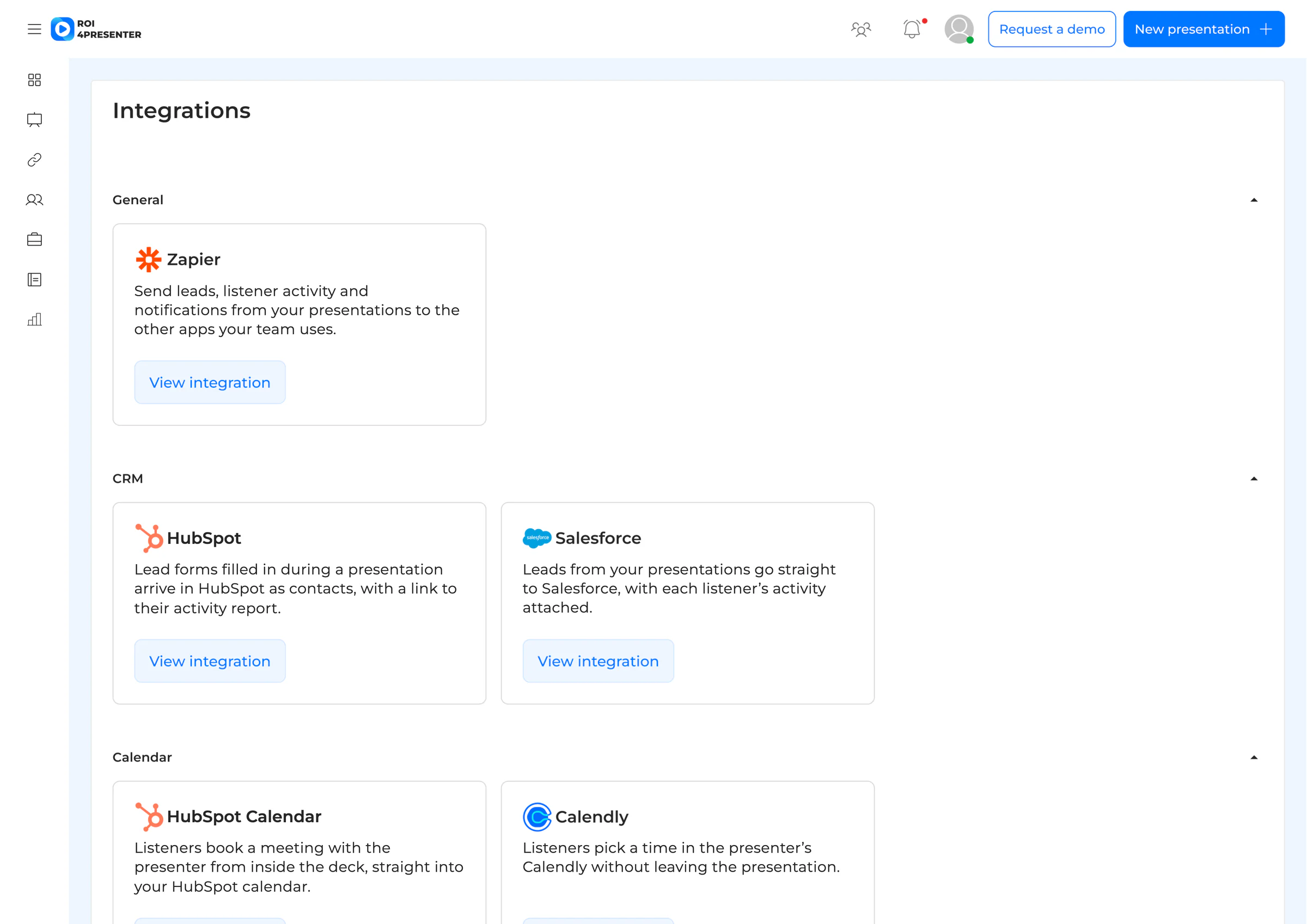
Integrations, because the deck is never the last step
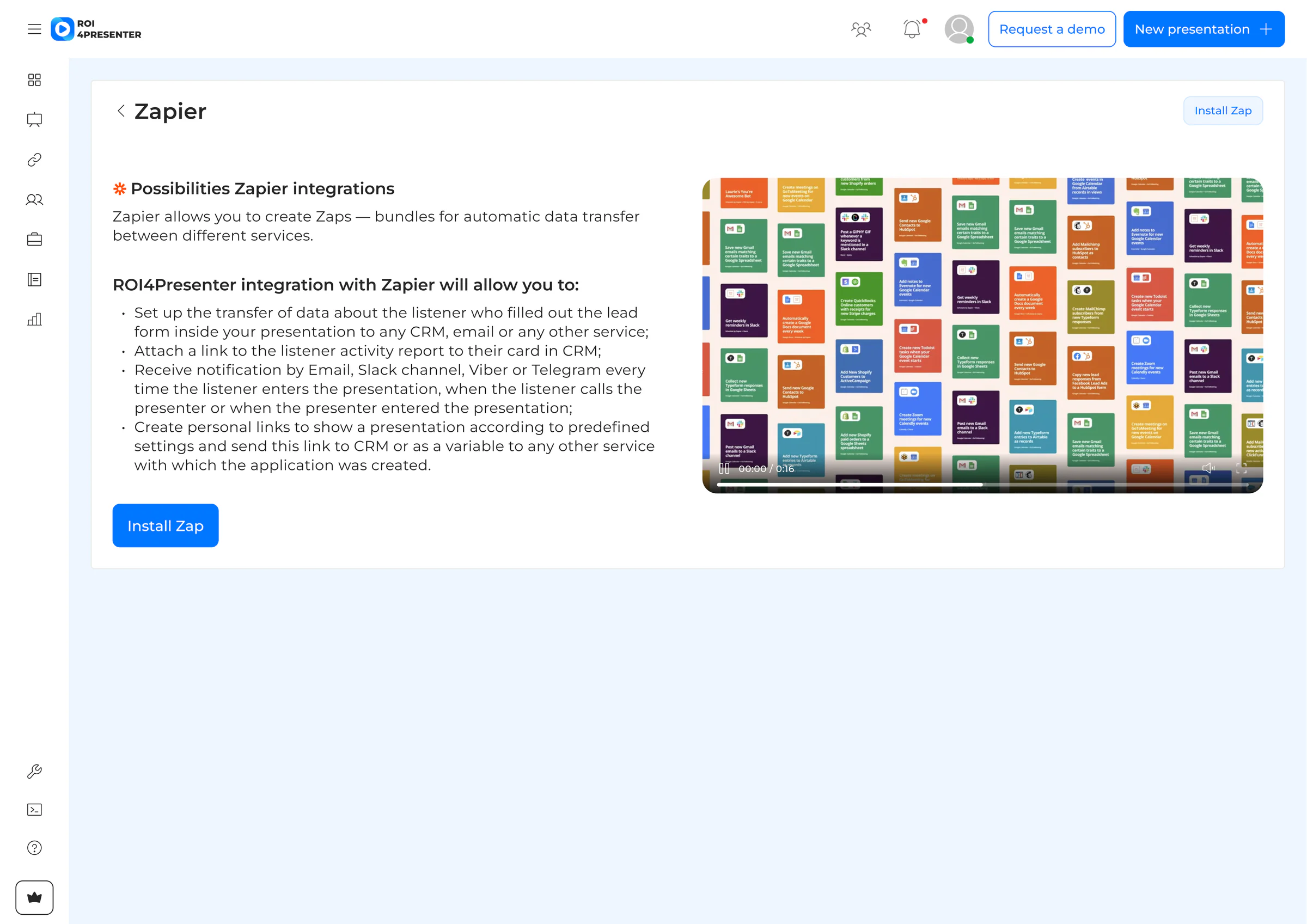
Zapier, HubSpot, Salesforce and Calendly. A captured lead has to land where the sales team already works, or the analytics never get used.
Two launches, twice the active users.
The improved portal doubled active users and lifted engagement, while the component system took nearly a third out of UI delivery time. The product earned a #3 Product of the Day placement on Product Hunt, G2 High Performer, and two Crozdesk awards.
What I would do differently.
I built the analytics work on interview themes first and only confirmed it with Hotjar recordings afterwards. The recordings were where the real finding was, and watching them earlier would have saved a full iteration. On the next product I inverted that order.
The full product ecosystem, at the end of three years
Creator, viewer and admin, plus the integrations that made it enterprise-viable. Over a thousand unique screens were created and validated across sprints to cover it.